 Argentina
 Australia
 Brasil
 Canada
 Chile
Chile Colombia
 España
 France
 Get Healthy
 Ireland
 Italia
 Magyarország
 México
 Philippines
 Türkiye
 U.S. Español
 Việt Nam
 भारत - हिन्दी
 臺灣
臺灣
Is milk vegetarian?
Throughout our lives, we’re told that milk is vegetarian, implying it doesn’t harm animals. But is that actually true? Do we overlook the cruelty and death involved in milk production?
Let us reveal the realities of the Indian dairy industry so you can decide for yourself, ‘Is milk vegetarian?’
Confinement
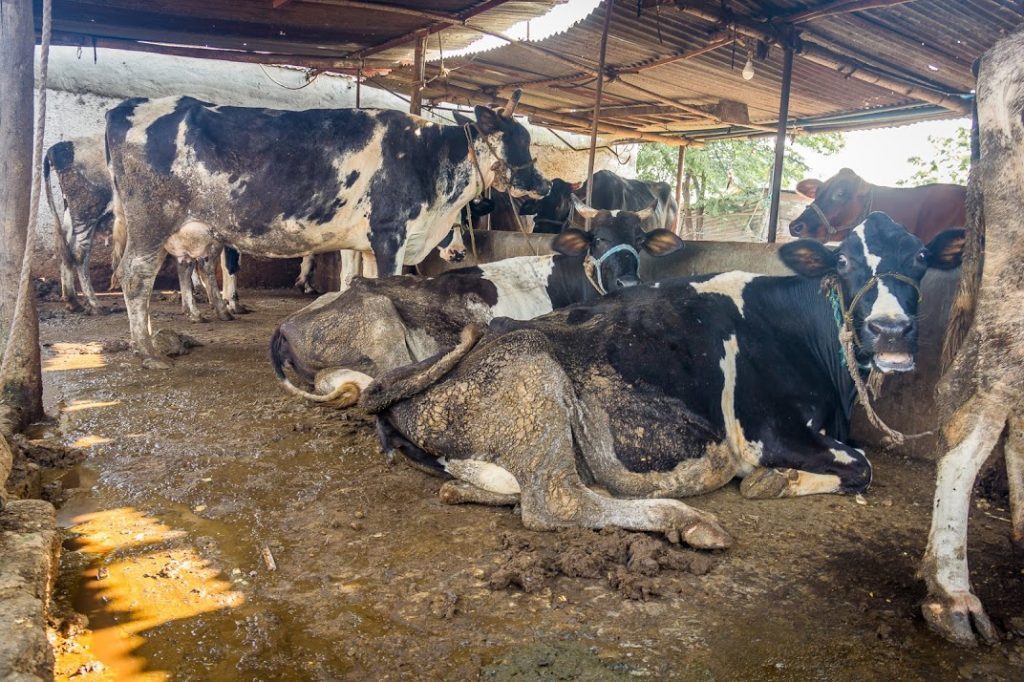
Most cows and buffalo are confined to small areas, and in urban dairy farms, they are kept in small rooms that have no sunlight or ventilation. A recent investigative report found that keeping the animals tethered in these makeshift shelters at all times is a common practice at 79% of dairies.
The tethers are very short, allowing as many animals as possible to be accommodated in the small shelters, which causes extreme physical discomfort. Sixty percent of dairies also restrain the animals by tying up their hind legs. They’re often tethered on hard floors, causing bruises and injuries as they lie in their own faeces for days.
Oxytocin and milk machines
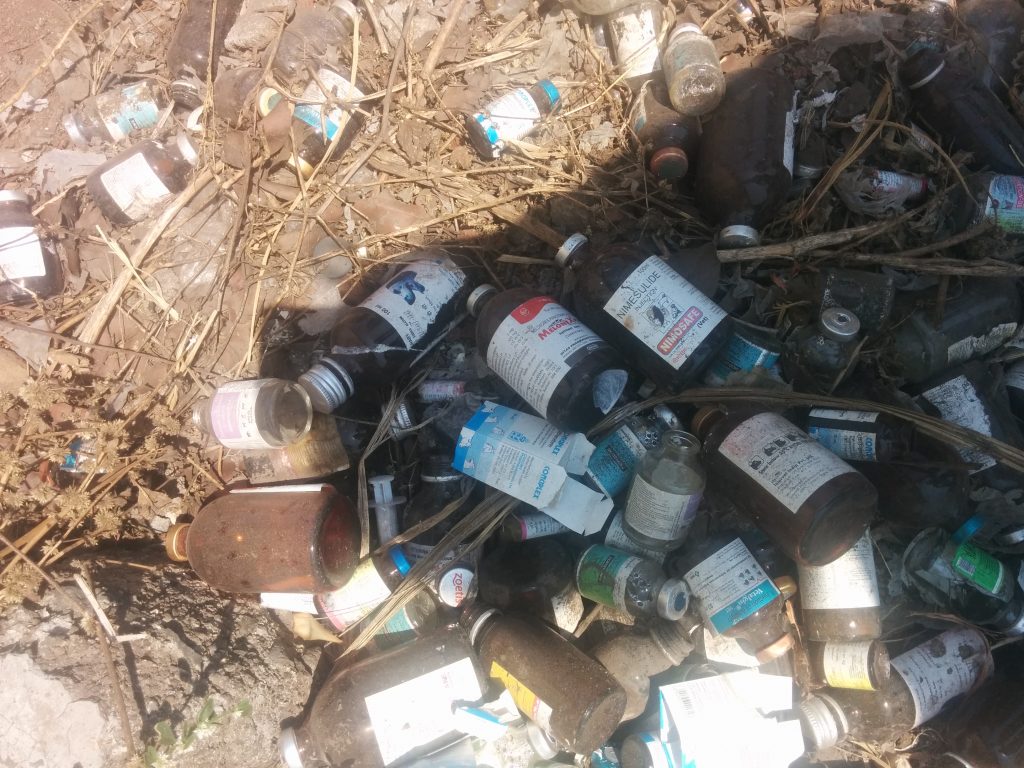
To increase their milk production, cows are given large doses of Oxytocin, a banned Schedule H drug, which causes severe labour pains. A survey conducted in Delhi, Haryana, and Uttar Pradesh found that 82% of cattle breeders were using Oxytocin.
It is also becoming a common practice to use milk machines. These machines are rarely sterilised, and the unhygienic conditions in the dairies lead to mastitis, a painful inflammation of the udder. Cows and buffaloes are given antibiotics and painkillers to counter this, which end up in the milk and can cause antibiotic resistance in humans.
Male calves—the forgotten victims
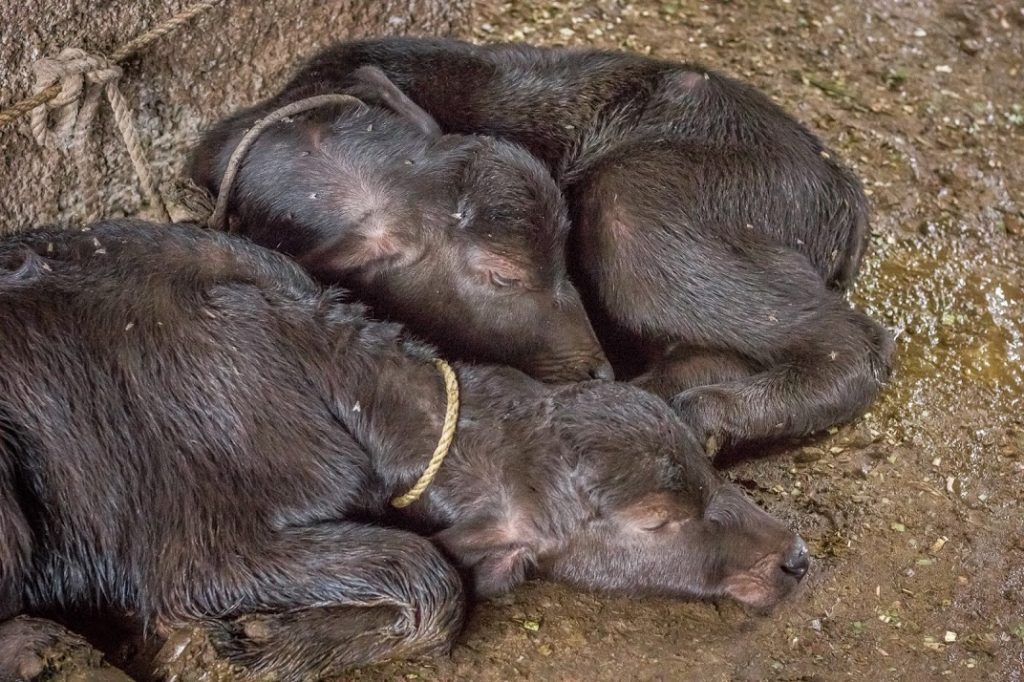
Male calves are useless to the milk industry since they can’t produce milk. They’re usually sold to butchers or skinned for their leather. Often, they’re simply abandoned at roadsides and left to die.
An undercover investigator writes, “Male calves are tied up with ropes so short that they cannot lift their heads; in a desperate attempt to reach their mothers, the calves often strangulate themselves to death. Some have their feet tied so they cannot try to go over to their mothers for milk, and their mouths are tied shut with ropes so they cannot cry out when they are hungry. These babies are then left to die a slow, agonising death in a corner.”
What about small farms and villages?
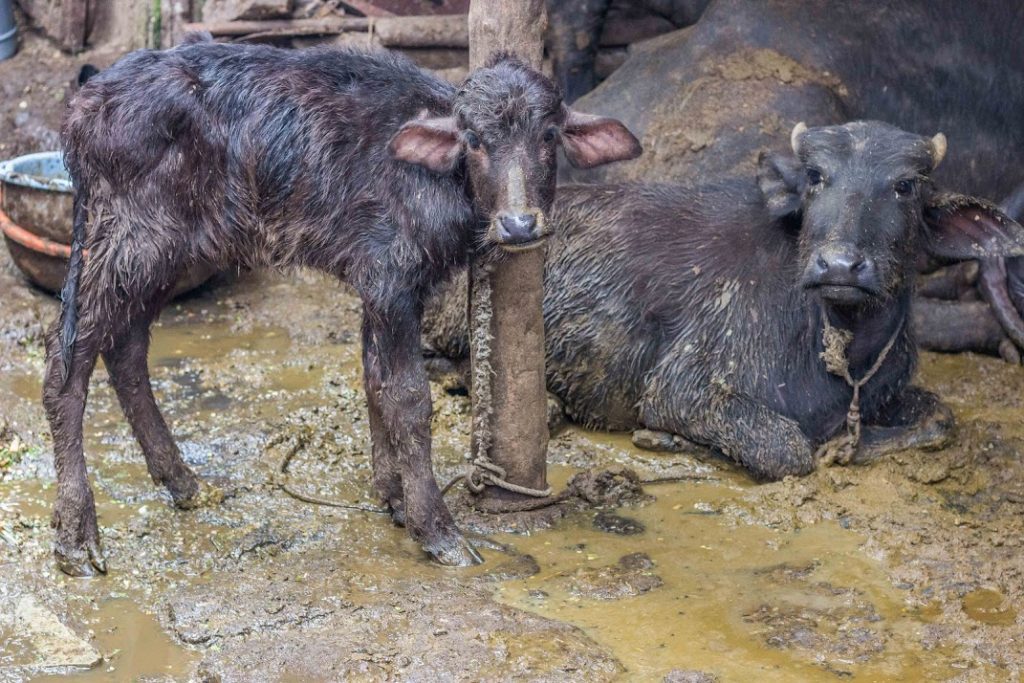
While small household farms may offer more freedom than intensive dairy farms, investigators have found that the conditions are not much better. A shocking undercover investigation of small-scale dairies found male calves being killed and their heads stuffed with straw to create a khalbachha—a dummy calf—which is placed near the mother to ensure that her milk production doesn’t decline due to the anxiety of not seeing her babies.
Beef and milk—two sides of the same coin
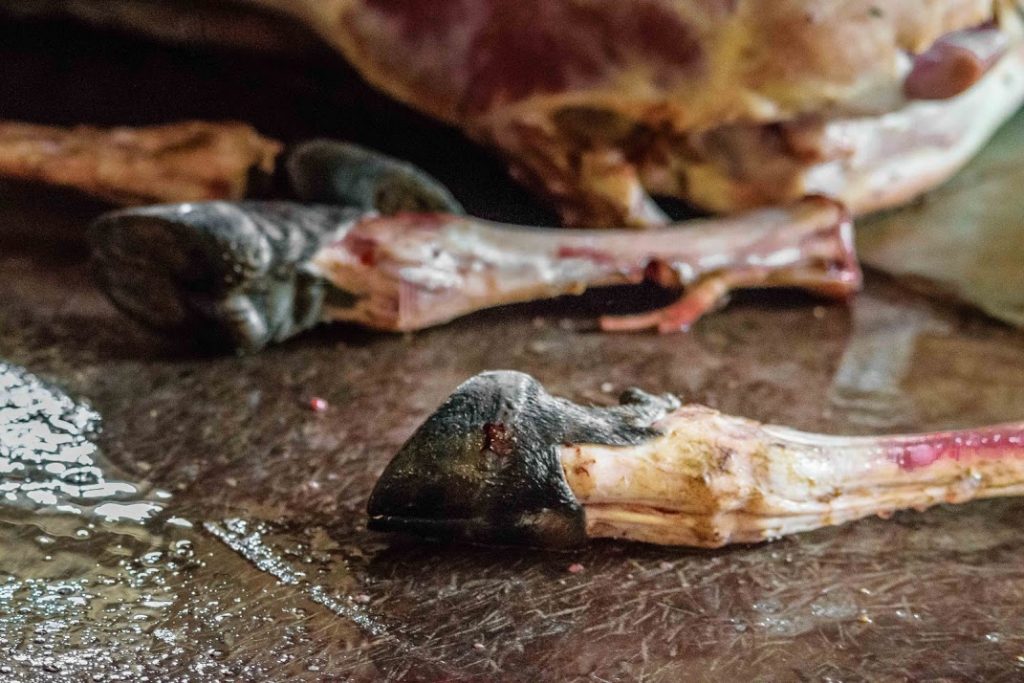
The natural lifespan of these animals is 25 years, but they’re rarely allowed to live beyond 10 years. After a life of confinement and abuse, a horrifying journey to the slaughterhouse awaits these “spent” cows and buffalo. Since cow slaughter is illegal in some states, these animals are transported by trucks or made to walk for days on end to other states without food, water, or rest.
Ingrid Newkirk, President of PETA, followed one of the caravans of cattle stumbling towards Kerala. “It’s a hideous journey,” she says, “To keep them moving, drivers beat the animal across their hip bones, where there is no fat to cushion the blows. The cows are not allowed to rest or drink. Many cows sink to their knees. Drivers beat them and twist their battered tails to force them to rise. If that doesn’t work, they torment the cows into moving by rubbing hot chilli peppers and tobacco into their eyes.”
At the slaughterhouse, workers often hack at the cow’s throat with dull blades or hit them with hammers in full view of other animals.
Is milk truly vegetarian?
Despite being a predominantly vegetarian country, India is the world’s leading supplier of beef—as a direct result of milk production. It raises the question, ‘Is milk truly vegetarian?’
Join our free 10 Weeks to Vegan program today to learn about the delicious and satisfying alternatives to milk. You can stop supporting the suffering of cows and buffalo in India.
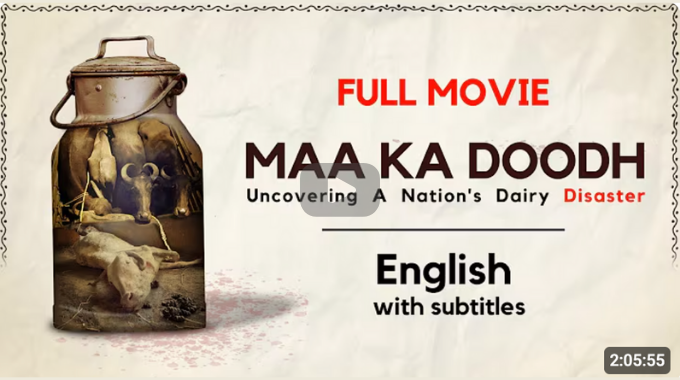
Watch the ‘Ma Ka Doodh’ documentary to see the reality of the Indian dairy industry!
References:
- Inside the Indian Dairy Industry: A Report on the Abuse of Cows and Buffaloes Exploited for Milk, by PETA India
- Cattle-ogue: Unveiling the Truth of the Indian Dairy Industry, by FIAPO
- Buffalo calf healthcare in commercial dairy farms: a field study in Uttar Pradesh (India) by R Tiwari, MC Sharma, and BP Singh
- How India’s sacred cows are beaten, abused, and poisoned to make leather for high street shops, by Peter Popham for Independent
- The Prevention of Cruelty to Animals Act, 1960
Want to try vegan?
Not sure where to start?
Sign up now for 10 Weeks to Vegan, the free guided challenge that will make your transition to veg eating a little easier and a lot more fun!

Easy
Recipes

Nutrition
Tips

Product
Information

Private
Support

We'd like to ask you a few brief questions before you get started.
Successful
1.7 million people have signed up across the world.
Approachable
Make changes at your own pace!
Supportive
Get your questions answered in our private Facebook group.
"I am so grateful to you for your vegan emails, which really helped me transition from vegetarian to vegan, something I have been waiting for years to do." - Pushkin E.
"Thank you. The day I realised how dairy is obtained, about all the torture & inhumane treatment that animals go through I decided to give up dairy. Dairy was a large part of my diet and household. But I decided to go Vegan for the animals." - Srishti A.
"Thank you for your valuable time and effort. The transition was pretty simple. I always wanted to be a vegan. Thanks for the push." - Sonia B.
"The 10 week long vegan challenge was really good. It helped a lot I think I’m gonna continue the vegan diet. It was really fruitful. Thank you" - Sneha K.
By choosing vegan food, you spare farmed animals a life of misery and reduce your diet's environmental impact.